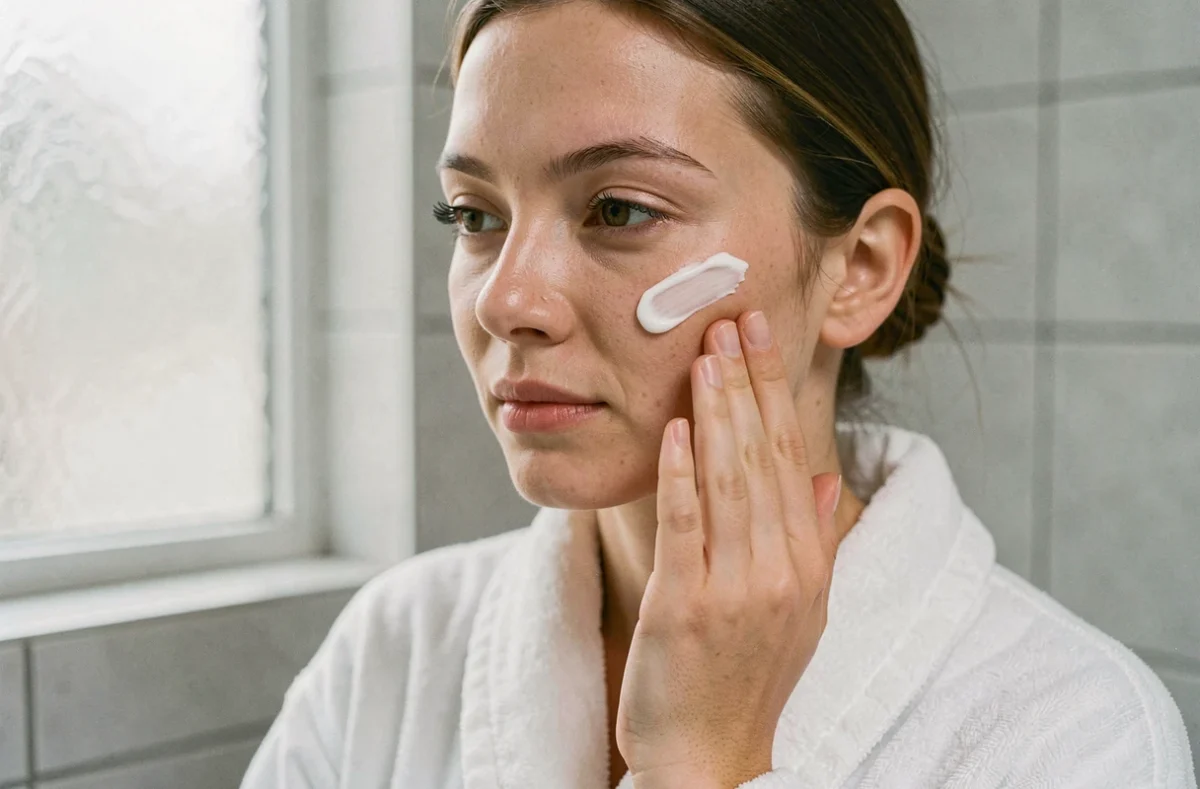
CeraVe is a skincare brand developed with dermatologists, characterized by the combination of three ceramides and a sustained release technology for active ingredients. Understanding the composition of these products allows for a better assessment of their actual benefits for the skin, beyond marketing claims.
MVE Technology and Sustained Release of CeraVe Actives
Most moisturizers deliver their actives all at once, at the time of application. CeraVe takes a different approach with its MVE (Multivesicular Emulsion) technology. This system encapsulates ingredients in concentric layers of lipids that are gradually released over an extended period.
The principle is based on an onion-like architecture: each lipid layer dissolves at its own pace, which spreads the release of ceramides, hyaluronic acid, and other actives. The skin thus receives a continuous supply rather than a single peak followed by a rapid decline.
This technology sets CeraVe apart from classic formulations that would contain the same ingredients without this release mechanism. As detailed in Fusion Business articles, it is precisely this patent that structures the brand’s formulation identity and justifies its reputation among healthcare professionals.
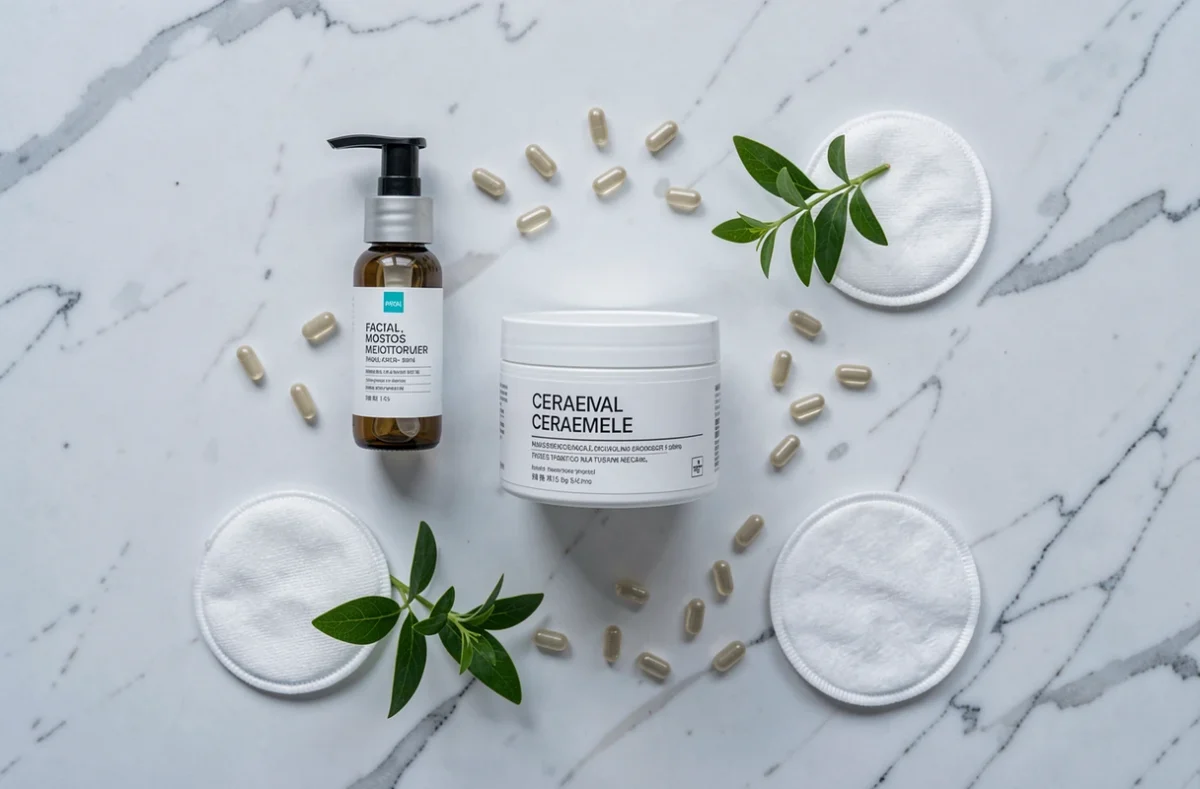
Ceramides, Cholesterol, and Fatty Acids: The Lipid Trio of the Skin Barrier
The outermost layer of the epidermis, the stratum corneum, functions like a brick wall. Dead cells (corneocytes) form the bricks, and the cement between them consists of lipids: ceramides, cholesterol, and free fatty acids. If this cement degrades, the skin loses its moisture and becomes vulnerable to aggressions.
Ceramides represent the majority lipid fraction of this intercellular cement. CeraVe formulas incorporate three ceramides (ceramide NP, ceramide AP, ceramide EOP) that correspond to subtypes naturally present in human skin.
One point deserves attention: the exact concentrations of these ceramides in the products are not public. European regulations require a descending order of ingredients on the INCI list beyond a certain threshold, but there is no obligation to publish precise dosages on manufacturers. Comparing two competing products based solely on their INCI list remains a limited exercise.
Other Key Actives in CeraVe Formulas
- Hyaluronic acid retains moisture in the upper layers of the epidermis, helping to maintain the volume and suppleness of the skin.
- Niacinamide (vitamin B3), present in several references, contributes to strengthening the barrier function and helps to reduce skin tone irregularities.
- Cholesterol completes the lipid trio by stabilizing the lamellar structure of the intercellular cement, a role often underestimated compared to ceramides.
Claims of “Repairs the Barrier”: What Studies Really Show
The mention “restores the skin barrier” appears on many CeraVe products. This claim is based on clinical studies, but one caution must be noted: each study focuses on a specific product, a given population, and a defined duration. Extrapolating the results of a trial conducted on the classic moisturizer to the entire range would be a reasoning error.
The non-comedogenic products of the brand are suitable for different skin types (dry, normal, oily). Tolerance is generally good, which explains the frequent dermatological recommendations. This does not mean that every reference in the catalog has undergone the same level of clinical evidence.

INCI Labeling and European Regulation: A Changing Context
Reading the INCI list of a CeraVe product provides access to the qualitative composition of the product, listed in descending order of concentration. Ingredients present at less than 1% can appear in any order, complicating interpretation for the consumer.
The European regulatory framework has recently evolved. Regulation (EU) 2023/1545, published in July 2023, has expanded the obligation for individual labeling of certain fragrance allergens. Affected products must be reformulated or carry appropriate labeling during a transitional period extending until 2026-2028 depending on the category. Comparing old and new INCI lists of the same CeraVe product may reveal differences related to this compliance, and not necessarily to a formula change.
To make the most of this information:
- Checking the manufacturing date or batch number helps to situate the product in relation to the regulatory transitional period.
- A newly listed ingredient does not mean it has just been added: it may simply have been made mandatory for display by the new regulation.
- CeraVe’s fragrance-free formulations are less affected by these changes, which may guide the choice for reactive skin.
CeraVe Facial Routine: Which Product for Which Need
The range is structured around two fundamental steps: cleansing and moisturizing. The foaming facial cleanser is suitable for normal to oily skin, while the moisturizing cleansing cream is aimed at dry to normal skin. Both contain the trio of ceramides and respect the skin’s physiological pH.
On the moisturizing side, the lightweight lotion and rich cream target different levels of dryness. Choosing between the two depends on the desired level of skin comfort, not strictly on skin type. A dehydrated oily skin can benefit from the lotion, while a normal skin exposed to cold may prefer the cream.
Targeted treatments (hyaluronic acid serums, repairing balm for very dry areas of the body) complete the routine without complicating it. Adding a serum only makes sense if the cleansing-moisturizing duo is insufficient to address a specific concern.
Choosing a CeraVe product is best based on reading the INCI list and understanding the MVE mechanism, rather than solely on the displayed promise. The evolving European regulations make this reading more relevant than ever, as they change what appears on the packaging without necessarily altering what is in the tube.