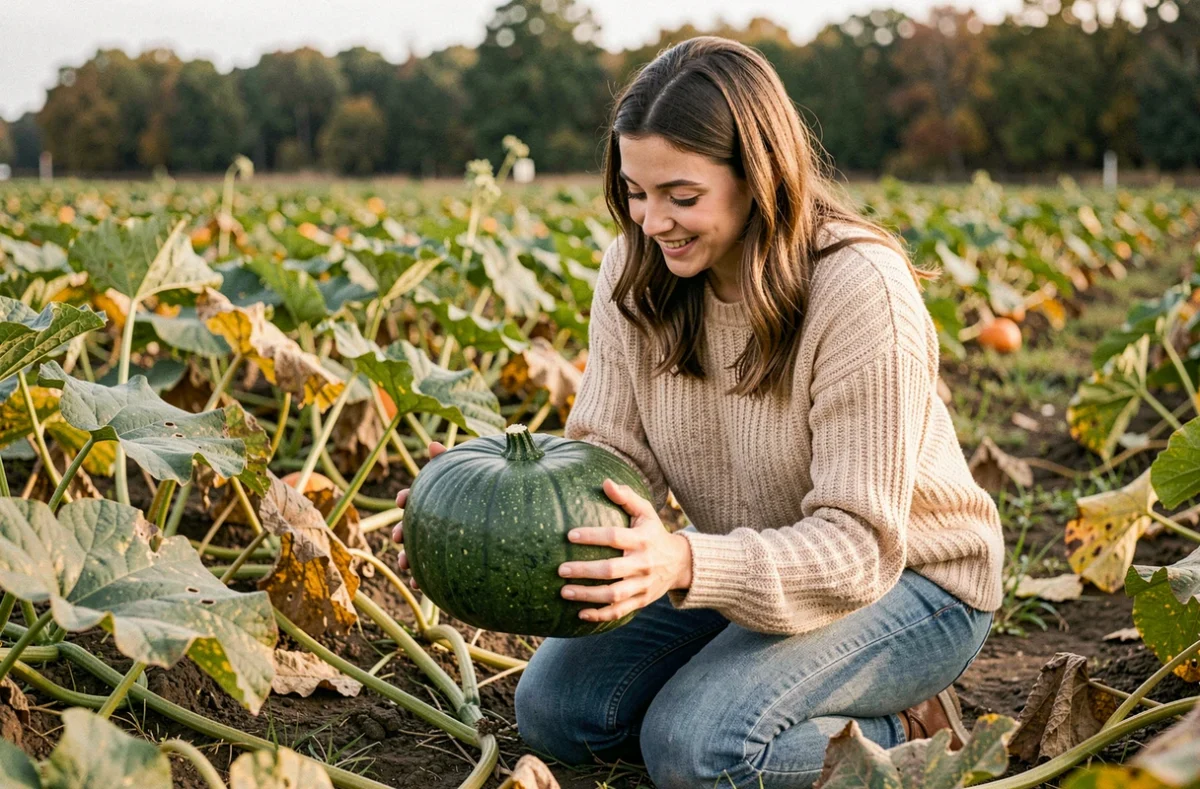
The verdant mystery of the green pumpkin finds its roots in a unique convergence of botanical factors, such as chlorophyll, responsible for this unusual pigmentation. This oddity of nature, far from being a mere whim, evokes wonder in various cultures around the world, adding a touch of exoticism to their celebrations. But the green pumpkin is not just a feast for the eyes. Behind its enigmatic appearance lie surprising applications, ranging from food to cosmetics. A true treasure of unknown benefits, symbolizing the incredible wealth of our biodiversity.
Verdant Mysteries: The Origin of the Green Pumpkin
In the mysterious world of gardening, there are many strange and inexplicable phenomena. The enigma that has recently captivated minds concerns a green pumpkin. Yes, you read that right: a pumpkin of an unusual hue • not the bright orange we typically associate with this autumnal plant, but rather a striking apple green.
The heart of this singularity lies in the vegetable garden of a passionate gardener named Jean-Pierre. As he inspected his squash plants in late August, he was struck by the unusual presence of a perfectly round and radically green pumpkin. It proudly stood among its orange sisters, as if defying any known horticultural law.
The question that plagued Jean-Pierre was simple: how on earth could his pumpkin have taken on this color? He then embarked on a meticulous investigation to unveil this most intriguing botanical mystery.
The anchor in the vegetable garden, a robust wrought iron object planted for several years at the center of the square reserved for cucurbits in his lovely French garden, was a clear suspect from the start. Could it have something to do with the unexpected chromatic evolution? Was it possible that its metallic material influenced the surrounding soil?
To uncover this secret linking the extraordinary vegetable and the ancient anchor, Jean-Pierre called upon a few local experts in botany and chemistry.
The Botanical Mechanisms Behind the Unusual Pigmentation
The incredible variety of bright and attractive colors observed in the natural world often has a hidden secret • botany at work. Many plants, from simple daisies to the most exotic orchids, use a complex range of chemicals to produce their distinctive hues. The main player is, however, chlorophyll, which gives seedlings their typical green glow.
The primary function of these pigments is not merely aesthetic: they also play a crucial role in the energy of the vital processes of flowers and shrubs. Photosynthesis cannot occur without them; they indeed capture sunlight before converting it into usable energy to help nourish their green and healthy hosts.
Yet, this is not the full extent of the work done by these proliferating biological dyes. Some of them are used as visual signals to attract • or repel • various types of animals: beneficial pollinators such as helpful insects can be lured by attractive warm radiations, while a poisonous display might serve to deter certain tempting predators!
That said, we must also mention something called “anthocyanins.” These pigments are responsible for a wide variety of shades ranging from red to dark blue on certain foliage during autumn.
The Wonder of the Green Pumpkin in Global Cultures
As we traverse continents and explore the richness of different cultures, one particular element seems to hold a special place in people’s hearts. It is the green pumpkin. This majestic plant of vibrant green is much more than just a fruit: it is the source of universal fascination.
The green pumpkin, with its distinct oblong shape and unique color that contrasts so strongly with the traditional orange, has always been surrounded by an air of mystique. In Asia, for example, it is not only used for culinary purposes but also as a religious offering during certain important festivals. This sacred fruit symbolizes abundance and prosperity for them.
On the African continent as well, its role far exceeds that of a mere food item. Its tough skin is often carved to create musical instruments or even used as a container during traditional rituals. Thus, it would not be wrong to say that this exotic variety greatly contributes to keeping certain ancestral traditions alive.
But the green pumpkin is not content merely to be admired for its multiple cultural uses; it also offers an incredibly wide array of flavors in the kitchen! From creamy soups to delicious sweet desserts and spicy curries • its sweet and tasty flesh has conquered palates around the world.
Far beyond culinary borders lies another domain where this exceptional plant shines, that of health.
Unveiling the Veil: The Surprising Applications of the Green Pumpkin
The green pumpkin is a vegetable with uses as diverse and varied as they are surprising. Often relegated to the background, serving merely a decorative or culinary function during Halloween festivities, it actually possesses many beneficial properties unknown to the general public. Its use far exceeds the ordinary.
It turns out that this pumpkin contains an impressive amount of essential nutrients such as vitamins A, B2, C, and E, as well as potassium, to name a few. It is therefore beneficial to our overall health, but its potential goes beyond just nutritional interest.
In the cosmetic realm, did you know that you can transform your green pumpkin into a revitalizing facial mask? A natural wealth of powerful antioxidants that help combat damage caused by free radicals and accelerate cell regeneration, its flesh can be applied directly to the skin after being pureed. Let it sit for about twenty minutes and then rinse: a glowing effect guaranteed!
In the garden, not only do its flowers attract bees, thus promoting pollination in your vegetable garden, but it also serves as an interesting green fertilizer because it is rich in nitrogen when its fallen leaves are left to decompose on the ground.
It is also an undeniable star in certain cuisines where the sweet and sugary taste of its flesh works wonders in savory or sweet dishes.