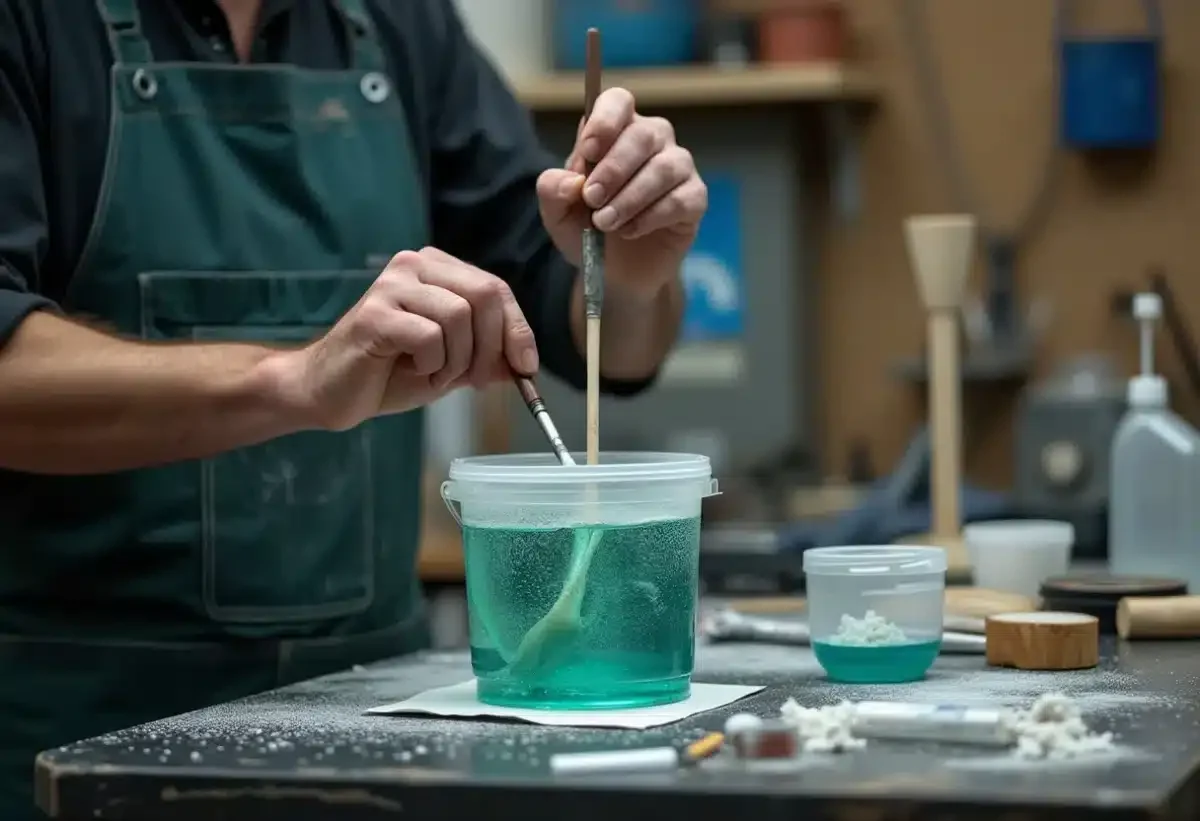
Polyester resin, often seen as reserved for seasoned craftsmen, is becoming increasingly accessible to DIY enthusiasts. This versatile material, used for projects ranging from automotive repairs to artistic creations, offers a multitude of creative possibilities.
Thanks to ready-to-use kits and tutorials available online, even beginners can embark on ambitious projects. Whether it’s to make molds, coatings, or decorative objects, polyester resin allows for the creation of solid and durable works while stimulating imagination and creativity.
Understanding Polyester Resin: Properties and Applications
The use of polyester resin in DIY relies on its numerous properties. Polyester is a synthesized resin that hardens after the addition of a hardener. It neither rots nor rusts and can be processed with minimal tools. When combined with fiberglass, it becomes a shock-resistant and rigid material.
Varied Applications
The combination of polyester resin and fiberglass, known as lamination, allows for the creation of a material called laminate. This plastic is used in various applications, including polyester repairs, wood cladding, and mold construction.
A gelcoat, a colored layer about 0.3 mm thick based on polyester, can be used against a smooth mold to achieve a perfect finish. Polyester laminating resin is also used to cover with a glass mat, make adhesives and nets, and repair fiberglass.
Materials and Tools
For optimal results, different types of fiberglass can be used:
- 225 g/m2 fiberglass mat: used as the first layer behind the gelcoat and as a final layer for a finer finish.
- 300 g/m2 fiberglass mat: ideal for polyester repairs and wood cladding.
- 450 g/m2 fiberglass mat: used for quick layering and thickness, as well as for mold construction.
- 300gr/m2 and 600gr/m2 woven fabric: for extra strong laminate alternating with glass mat.
- Spherecore 2mm, 3mm, 4mm: used for extra rigid polyester laminate and for lighter laminates.
For those wishing to make homemade resin, it is possible to obtain kits and online tutorials, thus simplifying the steps of preparation and use of polyester resin.
Practical Guide: How to Use Polyester Resin for Your DIY Projects
Preparation of the Surface and Materials
Before starting, ensure that the workspace is clean and free of dust and grease. To achieve the best results with polyester resin, follow these steps:
- Lightly sand the surface for better adhesion.
- Precisely mix the polyester resin with the hardener, following the proportions indicated by the manufacturer.
- Prepare fiberglass strips, cut to the desired size.
Application of the Resin and Laminating
Apply a first layer of resin on the prepared surface. Use a brush or roller to evenly spread the product. Then place the first fiberglass strip on the still-wet resin, and add a new layer of resin on top. Repeat the process with several layers of fiberglass and resin to achieve the desired thickness.
Practical Tips:
- Use gloves and safety goggles to avoid contact with skin and eyes.
- Wear a mask to avoid inhaling resin vapors.
- Work in a well-ventilated space for proper solvent evaporation.
Polyester laminating resin is a versatile material suitable for many DIY projects. It allows for structural repairs, creating molds, or reinforcing existing surfaces. For novice or experienced DIYers, mastering the use of polyester resin opens up a vast field of creative and functional possibilities.