
During a muscle gain phase, proteins and complex carbohydrates often take center stage. Fruits, on the other hand, are overlooked. Yet, they provide quickly usable carbohydrates, micronutrients that aid recovery, and compounds that can limit muscle damage after exercise.
Fruit Timing Around Training: The Factor That Lists Ignore
Have you ever noticed that a banana eaten an hour before a workout doesn’t have the same effect as a banana at breakfast? The difference lies in how the body utilizes carbohydrates depending on the timing.
Recent sports nutrition recommendations emphasize one specific point: distributing fruit carbohydrates around training rather than consuming them at any time. Before and after the workout, fruits with a higher glycemic index (ripe banana, dates, grapes) support work volume and accelerate muscle glycogen resynthesis.
At a distance from training, fruits richer in fiber and polyphenols (apple, orange, berries) are better suited. Their slower digestion provides steady energy without a sharp glycemic spike. This organizational detail changes the game for those looking for a fruit for muscle gain on Sport Mag and wanting to go beyond a simple shopping list.
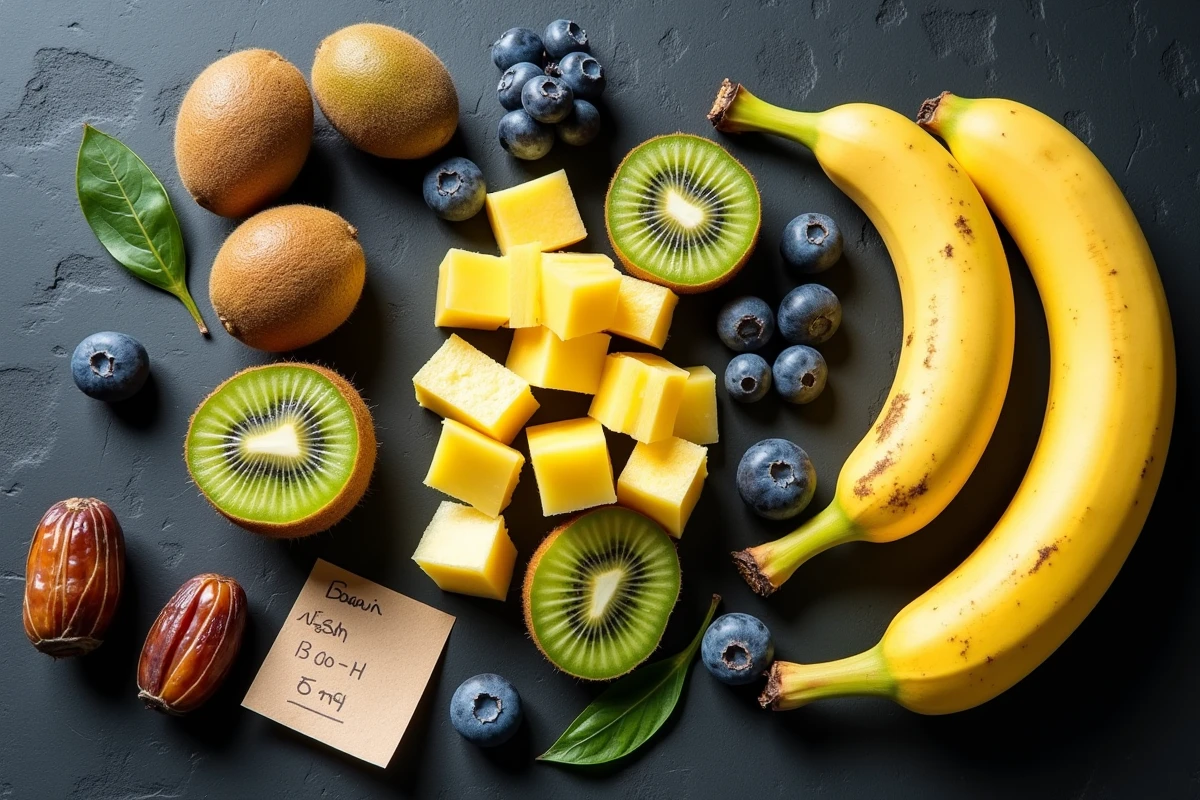
Dried Fruits and Dates: A Concentrated Caloric Intake for Muscle Gain
During a muscle gain phase, achieving a daily caloric surplus remains the primary challenge. Fresh fruits, often composed of over 80% water, provide relatively few calories per serving. Dried fruits solve this problem.
Dates, dried figs, raisins, and dried apricots concentrate carbohydrates in a reduced volume. A few dates are enough to add a significant energy intake without filling the stomach to the point of blocking the next meal.
Dried Fruits as an Intra-Workout Snack
A recent trend is to use dried fruits directly during the workout, as a replacement for industrial energy gels. The advantage: they combine quickly available carbohydrates, potassium, and polyphenols, without the additives found in traditional gels.
Why does potassium matter here? Because it contributes to muscle contraction and fluid balance. Even a slight deficiency can lead to cramps and reduce the quality of the last sets. Dates and dried apricots are good sources of potassium.
- Dates: quick carbohydrates, high potassium, easy-to-chew texture between sets
- Raisins: compact portion, quick energy supply, easy to transport
- Dried figs: good source of carbohydrates, also provide calcium and magnesium
- Dried apricots: rich in potassium, tangy taste that alleviates dry mouth
Pomegranate, Cherries, and Dark Berries: Recovery as a Lever for Progress
Gaining muscle mass isn’t just about eating more. The ability to recover between sessions directly affects the training volume that the body can sustain over time. This is where fruits rich in polyphenols come into play.
Several recent trials show that regular consumption of tart cherry juice or pomegranate reduces markers of muscle damage and soreness after resistance training. Studies published in the European Journal of Sport Science and a systematic review in Antioxidants confirm improved strength recovery.
Why This Supports Muscle Gain
Less soreness and faster restored strength allow for maintaining high training volumes week after week. A muscle that recovers better is a muscle that can be stimulated more often. Over several months, this difference translates into additional mass gain.
Dark berries (blueberries, blackberries, blackcurrants) share this antioxidant-rich profile. They easily combine with cottage cheese or a protein shake, which increases both protein and micronutrient intake in the same meal.

Banana and Avocado: Two Complementary Profiles for Macronutrients
The banana remains the most consumed fruit in gyms, and for good reasons. Its richness in carbohydrates and potassium makes it a simple and effective pre-workout snack. The riper it is, the more quickly its sugars are absorbed.
The avocado plays a different role. Technically a fruit, it stands out for its fat content. The fats in avocado are primarily monounsaturated fatty acids, beneficial for proper hormonal function. The production of testosterone, which contributes to protein synthesis, partly depends on a sufficient intake of quality fats.
Combining these two fruits in the same day covers different needs: quick carbohydrates on one side, healthy fats on the other. A muscle gain diet relies on this balance between macronutrients, and fruits can contribute to each category if the right ones are chosen.
Building a Realistic Plan with Fruits for Muscle Gain
A muscle gain meal plan that incorporates fruits gains in nutrient variety without complicating meal preparation. Here’s a coherent distribution throughout the day:
- Morning: dark berries with a protein source (cottage cheese, oats) for antioxidants and moderate satiety
- Pre-workout: ripe banana or a few dates for a quick carbohydrate supply
- Intra-workout: a small handful of raisins or dried apricots to maintain energy
- Post-workout: pomegranate juice or cherries combined with a protein source for recovery
- Main meals: avocado included in lunch or dinner for fat intake
Fruits do not replace protein sources or complex carbohydrates like rice or sweet potatoes. They complement a solid meal plan by providing micronutrients, fiber, and bioactive compounds that staple foods do not always supply. A well-constructed muscle gain meal combines these different sources to cover both energy and recovery needs.