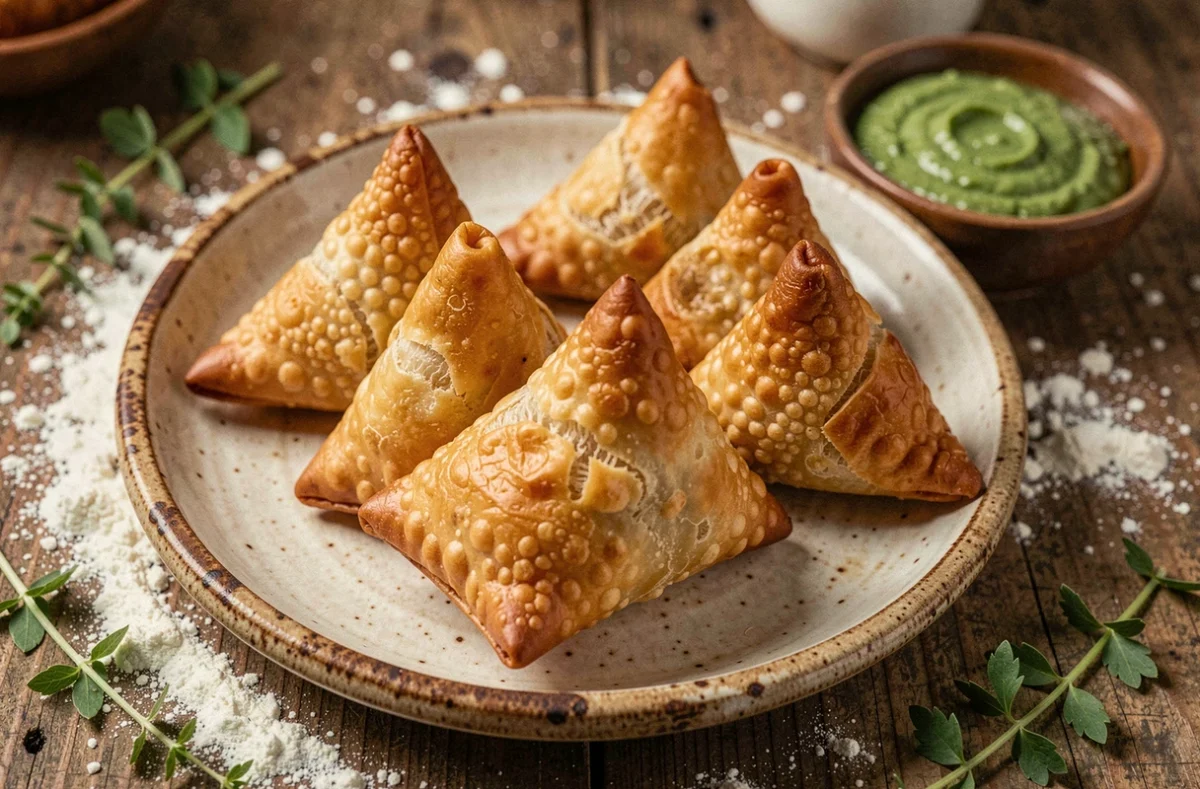
Cheese samosas are as much a part of Mauritius’s culinary landscape as dholl puri or gâteau piment. These small triangular pastries, inherited from the traditions of northern India, crossed the Indian Ocean and became a staple in Mauritian home kitchens. The cheese filling, often enhanced with corn or fresh herbs, is one of the most popular variations, enjoyed as a snack or served alongside a Creole meal.
Mauritian samosa pastry: spring roll wrappers or homemade dough
The choice of wrapper directly affects the final texture. Mauritian households use two options, and they produce very different results.
Spring roll wrappers are widely used for their convenience and turn light and crisp when fried. They’re quick to work with, easy to fold and ideal for cooks in a hurry. The downside is that they absorb more oil if the frying temperature isn’t properly controlled, and they soften quickly as they cool.
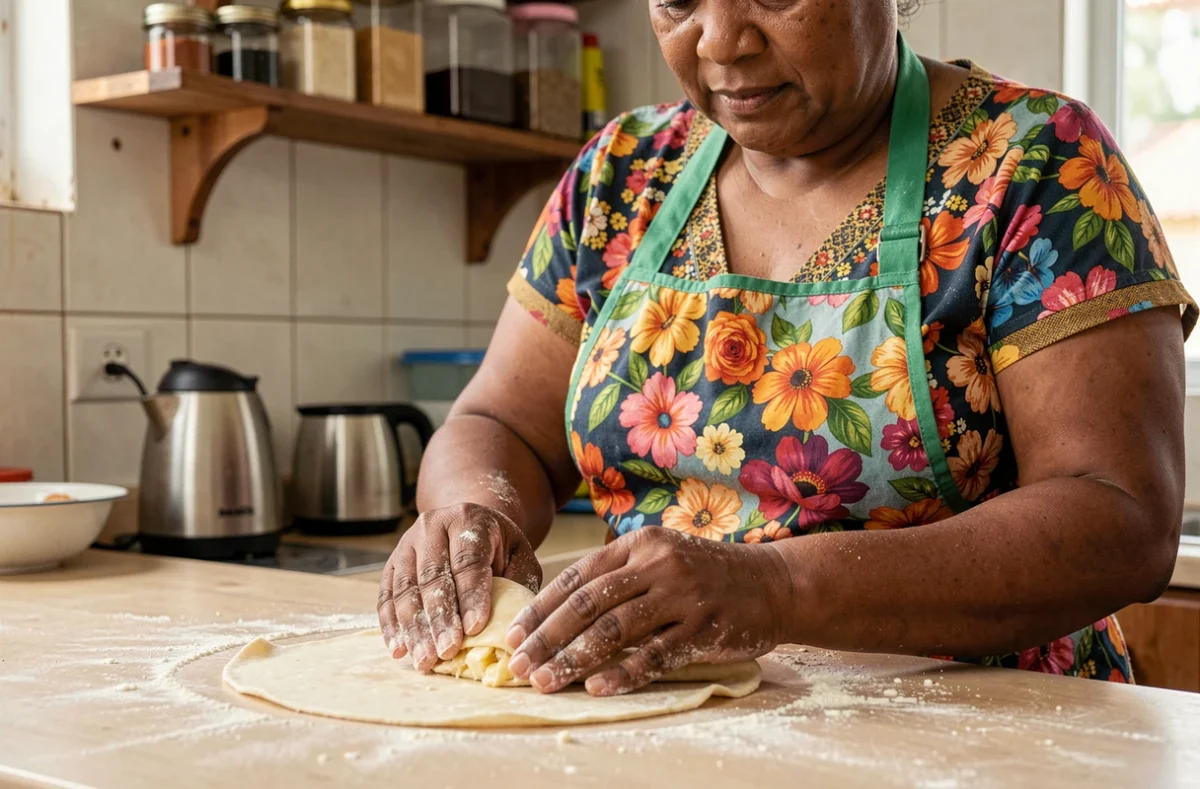
Homemade dough, made with flour, water and a little oil, takes more time. It needs to be kneaded until smooth and pliable, rolled out thinly, then cut into strips. The result is a thicker, sturdier wrapper that stays crisp for longer after cooking. For samosas that need to hold up on a buffet or appetizer platter, homemade dough is the most reliable choice.
Making an authentic Mauritian cheese samosa means choosing between these two wrappers based on the occasion: a quick family meal or a carefully prepared dish for a special event.
Cheese filling: ingredients and common mistakes to avoid
Talking about “cheese samosas” as if there were just one kind is misleading. There’s no single standard filling, but dozens of family variations. The type of cheese, added spices and choice of vegetables can all dramatically change the flavor.
Which cheese to use for the filling
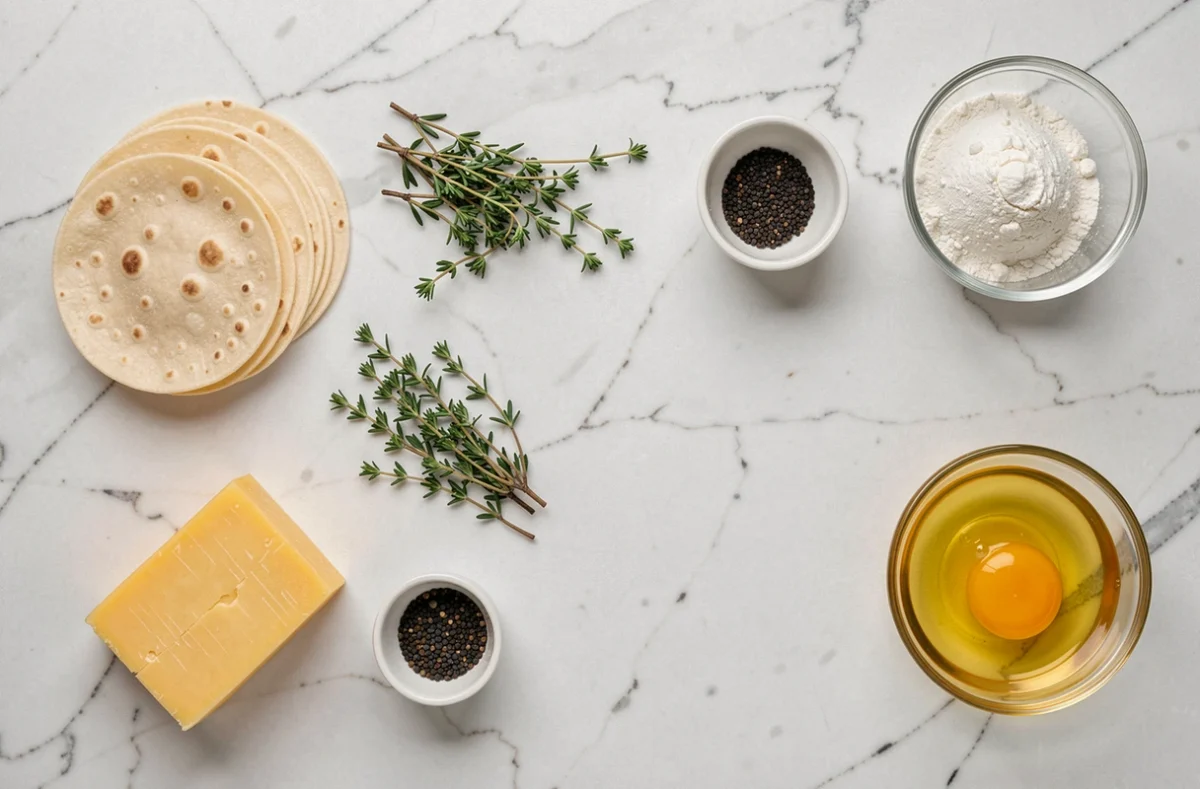
Processed cheese (such as La Vache qui rit or a local equivalent) is the most common choice in everyday Mauritian recipes. It melts evenly, mixes easily and doesn’t release too much fat during cooking. Some recipes use grated cheese (Emmental or Gruyère), which has a stronger flavor but can turn firm if fried for too long.
The main thing is to choose a cheese that melts well without releasing too much moisture. A cheese that’s too wet, such as fresh mozzarella, may cause the wrapper to burst during frying.
Add-ins that make all the difference
- Corn kernels, a Mauritian classic, add a touch of sweetness that contrasts with the saltiness of the cheese. Drain them well so they don’t make the filling soggy.
- Finely chopped onion, sautéed for a few minutes, adds depth to the filling. Raw onion releases too much moisture.
- Finely chopped fresh green chili adds the characteristic heat of Mauritian cuisine. Half a chili is enough for around twenty samosas.
- Fresh coriander, added off the heat, brings fragrance without cooking. Stir it into the filling just before folding.
The most common mistake is preparing the filling while it’s still hot and filling the wrappers straight away. Letting the filling cool before folding keeps the pastry from softening and tearing when it comes into contact with the heat.
Frying samosas: temperature and technique for a crisp result
Frying is where it all comes together. A perfectly folded samosa that’s poorly fried will be greasy, soggy or burnt.
The oil must be hot enough before you add the samosas. If the temperature is too low, the pastry will soak up oil like a sponge. If it’s too high, the outside will burn before the cheese melts inside. The traditional test is to drop a small piece of dough into the oil: if it rises to the surface within a few seconds with steady bubbles, the temperature is right.
Another often-overlooked point is how many samosas you add to the fryer at once. Overcrowding the oil causes the temperature to drop sharply. Frying small batches of four or five keeps the cooking temperature even.
Air fryer cooking: an alternative with its limitations
Air frying is becoming increasingly popular, including among the Mauritian diaspora. Lightly brush the samosas with oil, arrange them in a single layer and turn them halfway through cooking so they brown evenly.
The result is drier and lighter than traditional deep-frying. However, the texture is different: oil-fried samosas have a more pronounced, even crispness. An air fryer is a reasonable compromise for reducing fat, but it isn’t an exact substitute.
After cooking: keeping cheese samosas crisp
There’s one detail that ingredient lists almost never mention: what happens between taking the samosas out of the oil and serving them.
Placing them straight onto paper towels is a common habit. The paper absorbs excess oil, but the side in contact with it softens because steam gets trapped underneath. Placing the samosas on a wire rack for a few minutes lets air circulate around them and keeps them crisp for much longer.
Cheese samosas are traditionally served with homemade chili paste, coriander chutney or sweet-and-sour sauce. In Mauritius, they’re often served with a green salad or eaten on their own, standing up, after being bought from a street vendor.
Cheese filling is less common than potato curry as a street food, and is primarily a homemade preparation, passed from one kitchen to another without a written recipe. That’s probably why no two versions are exactly alike.